👤
Garry Nolan
SDescription
Overview
Stanford immunologist and Rachford & Carlota Harris Professor. Over 300 peer-reviewed publications, holder of 40+ patents. Co-founder of the Sol Foundation (2023). One of the most influential scientists in the modern UAP debate.
UAP Engagement
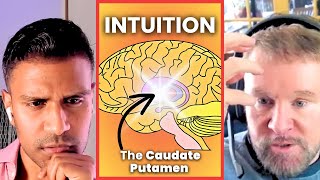
Has analyzed alleged UAP materials since ~2012 using mass spectrometry and electron microscopy. Investigated MRI scans of individuals with reported UAP close encounters (caudate-putamen anomalies). Advised the CIA and DIA on UAP material questions. Public disclosure engagement since 2021.
Strengths and Weaknesses
Unassailable academic credentials (Stanford, NAS). Peer-review methodology even in UAP work. Sol Foundation as institutional lever. However: Some of his public statements (e.g., '100% certainty' about NHI materials) exceed published data. The bridge between Stanford authority and UAP activism is both a strength and vulnerability.
Biography
TimelineGarry Nolan is a British-American immunologist, inventor, and professor at Stanford University School of Medicine. His established academic work is in pathology, cancer biology, immunology, and high-dimensional analysis of cells, and he has founded or co-founded biotechnology companies.
In the UAP field, Nolan became publicly visible through discussions of alleged anomalous materials, reported biological effects associated with UAP encounters, and the need for scientific methods in a subject often dominated by rumor and secrecy. As a co-founder of the Sol Foundation, he helped frame UAP as a research, policy, and institutional-literacy issue. His significance lies less in any single claim than in connecting laboratory science, medical questions, materials analysis, and public policy debate.
Organizations (2)
Focus Areas
scientificacademic
Books
As an Amazon Associate I earn from qualifying purchases. Book links are affiliate links.
Connected Timeline Events (9)
2026U.S. government establishes UAP Governance Board
2023Sol Foundation Inaugural UAP Symposium at Stanford University
2024NSF Hosts Interagency Meeting on Disruptive Technology with UAP Focus
2022Nolan and Vallée Publish Peer-Reviewed Paper on Iowa UAP Materials
2016Havana Syndrome: Mysterious Attacks on US Diplomats and Intelligence Officers
2015Stanford: Nolan and Vallée Begin Analysis of Anomalous UAP Materials
2011CIA Recruits Garry Nolan to Analyze Brain Scans of UAP Contact Persons
1977Council Bluffs Physical Trace Incident
1957Ubatuba UFO Explosion and Magnesium Fragments