USS Nimitz Tic Tac Encounter
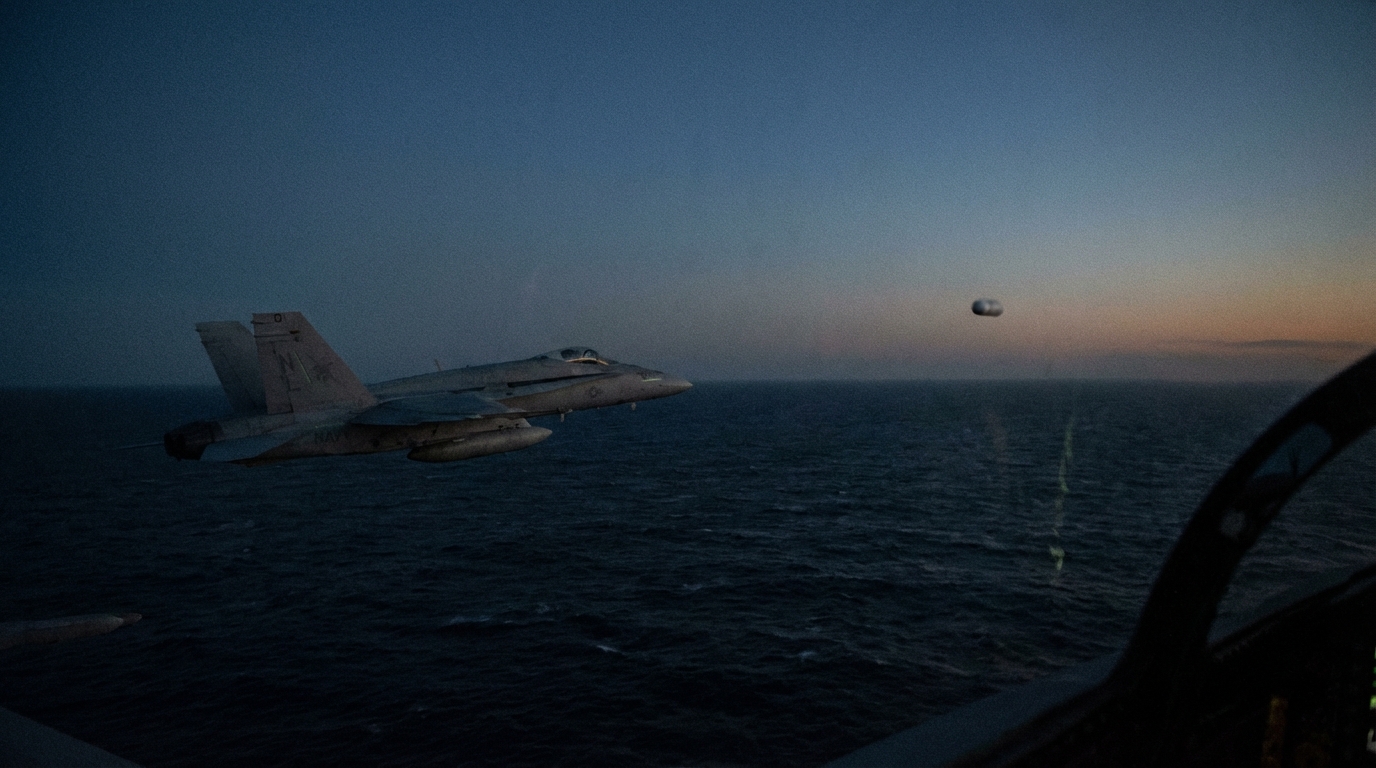
Navy pilots from USS Nimitz encounter a white tic-tac shaped object performing impossible maneuvers off the coast of San Diego. FLIR video later declassified.
Videos
Background
In November 2004, radar and weapons systems aboard USS Princeton tracked anomalous objects off the coast of Southern California over several days. The USS Nimitz Tic Tac Encounter involved trained military pilots witnessing an unexplained oval-shaped object with capabilities beyond known technology.
The Incident
Radar- und Waffensysteme der USS Princeton verfolgten anomale Objekte vor der Küste Südkaliforniens über mehrere Tage.
Am 14. November wurden Commander David Fravor und Lt. Commander Alex Dietrich in ihren F/A-18 Super Hornets zur Abfangmission geschickt.
Witness Accounts
Bei niedriger Höhe beobachtete Fravor ein weißes, ovalförmiges Objekt — etwa 40 feet long, ohne Tragflächen, Antrieb oder Abgas — das über aufgewühltem Wasser schwebte.
- Als Fravor sein Flugzeug auf das Objekt zulenkte, beschleunigte es extrem schnell und verschwand.
- Sekunden später wurde es 60 miles entfernt auf Princeton-Radar erneut erfasst.
Investigation
Eine Infrarotkamera eines zweiten Kampfjets zeichnete das FLIR1-Video auf.
Das Video wurde 2017 zusammen mit dem NYT-Artikel über AATIP öffentlich veröffentlicht.
Significance
Der Vorfall gilt als einer der best-documented military UAP cases.
- Multiple Sensoren: Radar, IR, visuell
- Zeugen: Ausgebildete Militärpiloten
- Object performance: Unerklärt durch aktuelle Technologie
Elizondo's Account
In Imminent, Elizondo describes the Nimitz encounter as a foundational case for the AATIP program. He explains that the incident led to the systematic development of the Five Observables framework — the analytical tool AATIP used to evaluate UAP capabilities: (1) anti-gravity lift, (2) sudden and instantaneous acceleration, (3) hypersonic velocities without signatures, (4) low observability or cloaking, and (5) trans-medium travel. Elizondo notes that the encounter data was later selected as one of three videos submitted for official declassification via the DOPSR process, alongside the GoFast and Gimbal footage.
Significance
The Tic Tac encounter marked a turning point in UAP credibility because it combined multiple independent sensor systems — radar, infrared targeting pods, and visual observation — all recording the same object displaying capabilities that defied known physics. The witnesses were active-duty Navy pilots with no incentive to fabricate, and the encounter was tracked by the USS Princeton's advanced Aegis radar system. This convergence of sensor data and credible testimony became the catalyst for modern UAP transparency.