Robertson Panel
A CIA-convened scientific committee led by physicist Howard P. Robertson reviewed UFO evidence and recommended a public debunking campaign.
Videos
Background
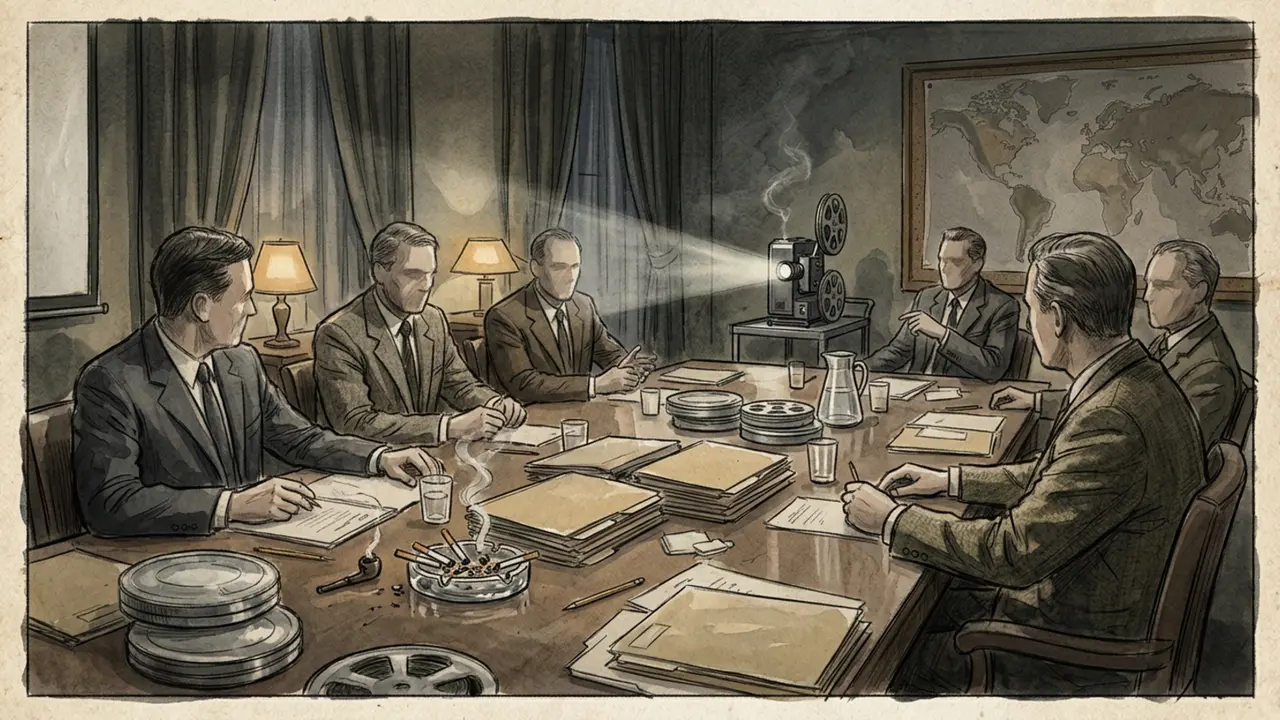
In January 1953, the CIA convened a panel of prominent scientists to evaluate whether unidentified flying objects posed a legitimate threat to national security. Chaired by Caltech physicist Howard P. Robertson, the group spent four days reviewing evidence compiled by Project Blue Book.
Panel Composition and Mandate
- Led by Howard P. Robertson (Caltech physicist)
- Comprised of prominent scientists
- Reviewed films, photographs, and case summaries from Project Blue Book
- Duration: four days of deliberation
Key Findings
The panel concluded that UFOs themselves did not represent a direct physical danger to national security. However, the committee identified significant indirect risks related to public perception and communication infrastructure.
Identified Concerns
- Widespread public fascination could overwhelm military communication channels
- Public interest could create openings for hostile propaganda
- Civilian UFO organizations posed potential subversive influence
Recommendations
The committee recommended a coordinated effort to strip the subject of its mystique through education and media engagement. The panel also suggested that civilian UFO organizations be monitored for potential subversive influence.
Lasting Impact
Once declassified, these recommendations fueled lasting suspicion among researchers that the US government had deliberately suppressed genuine evidence regarding UFOs.
Elizondo's Account
In Imminent, Elizondo reveals that the Robertson Panel's debunking strategy included a planned cooperation with the Walt Disney Company to produce entertainment content designed to reduce public interest in UFOs. The panel also recommended involving the University of Colorado in a scientific study — a recommendation that would later materialize as the Condon Committee. Elizondo frames the Robertson Panel as the origin point of a deliberate institutional effort to suppress serious investigation of aerial phenomena within the US government.
Significance
The Robertson Panel shaped US UFO policy for over a decade. Its call to actively demystify the topic and surveil civilian groups established a framework that critics view as deliberate government suppression of the phenomenon.